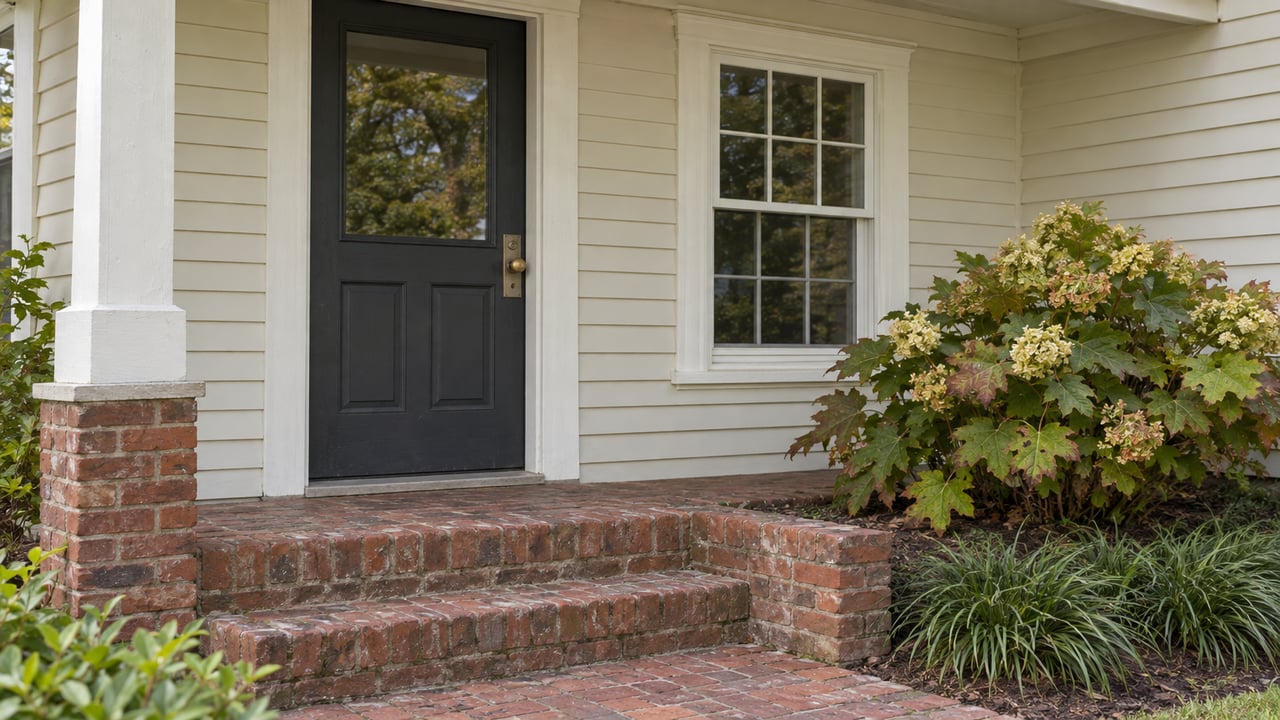
What Uptown Westerville's Design Review Board Means Before You List a Nearby Property
October 1, 2026
October 1, 2026
On June 4, the Westerville Uptown Review Board spent nearly forty minutes deciding whether a frozen custard shop could keep a sandwich board out front. There was a failed motion, a tied vote, and a motion to reconsider before the seven-member board settled on an answer: Whit's Frozen Custard could keep its sign, but only with a maximum of seven colors, and white would not count as one of them.
It sounds like a small thing to argue about. It is also exactly the kind of decision that determines whether a storefront, or a house near one, is ready to sell on the timeline its owner has in mind.
The Uptown Review Board reviews any visible exterior change within Westerville's Architectural Review District: new construction, additions, facade work, window and door replacements, signage, awnings, paint color, demolition, and landscaping elements like fences and walkways. None of it happens without a Certificate of Appropriateness, the permit that says the board has looked at the change and found it consistent with the district's character.
The rules behind that permit trace back to the Uptown Westerville Design Guidelines, adopted in 1995, and they are not symbolic. Uptown Westerville Inc., the nonprofit that represents merchants and property owners in the district, has said as much directly. Executive Director Lynn Aventino has described the board's role this way:
"The details matter because the district matters."
She has also said that a sign, an awning, or a facade change may look small on its own, but that these decisions add up to shape the district's identity over time.
The board applies the same review process to every applicant, including the city. In a spring 2026 meeting, Westerville's Community Affairs Division proposed adding green-and-white vinyl panels to the fence along the north side of City Hall, part of a plan to recognize Westerville Champions, the program that honors local volunteers and civic leaders. The board voted 1-5 against the design as submitted, and a city staff member said he would take the proposal back to see what changes could be made.
The same meeting saw the board approve a mural planned as part of Westerville's America 250 celebration, sign off on fabric panels for the elevated patio at High Bank Distillery, the bar and restaurant built into the former post office building, and table a proposal to change the awnings at Generations Performing Arts Center. Four items, four different outcomes, decided one at a time, by the same seven people who also review private renovation requests.
Because the city's own proposal goes through the same review as everyone else's, a homeowner's paint change or a business owner's sign redesign can expect the same process. That is useful to know before planning a pre-listing refresh around a closing date.
Most Certificate of Appropriateness questions resolve at the monthly meeting. Some do not.
Whit's Frozen Custard owner Joe Schertzinger inherited a chalkboard-style sign when he bought the shop in 2022. The sign had been approved in its original 2015 form, but a later replacement had gone up without board sign-off, something Schertzinger says he didn't know until Westerville's zoning inspector flagged it in April. He was cited in Mayor's Court for violating the city's certificate-of-appropriateness requirement, a misdemeanor. A certified letter about the case went unclaimed. Schertzinger says he never received it. He got a continuance, brought the sign back to the board, and won approval, at which point he assumed the matter was closed.
A separate case that same year involved a landscape modification at 91 South State Street. The property owner, Terrill D. Burnworth, was cited after an alleged certificate-of-appropriateness violation. The case was continued several times before both misdemeanor charges were dismissed in December, though not before $125 in court costs came due. In a third instance, a sidewalk flag sign outside a newer Uptown restaurant was removed by a city employee without warning, over the objections of staff on site.
None of these are catastrophic outcomes. They are inconvenient ones, arriving at the worst possible moment if a seller is racing to get a property market-ready or a buyer is closing on a storefront they assumed came move-in ready from a signage standpoint.
Here is the part that catches people off guard. Westerville's Architectural Review District is not the same thing as "historic Westerville" in a general sense. It is a defined boundary, centered on the commercial core along State Street, and the city maintains an official map of exactly which parcels fall inside it.
Just blocks away, the city's zoning code lists a separate overlay: the Olde Westerville Overlay, distinct from the Architectural Review District and governed by its own standards. A house that looks and feels like it belongs to the same historic fabric as the shops on State Street may sit under an entirely different set of rules, or under standard residential zoning with no design review requirement at all.
That distinction matters for anyone planning work on a property near Uptown before putting it on the market. A quick exterior refresh, new paint, a fence repair, a window swap, might need nothing more than a standard building permit on one side of a boundary line, and a Certificate of Appropriateness plus a wait for the first Thursday of the month on the other.
If a property sits inside the Architectural Review District, whether it is a storefront or a mixed-use building, any exterior work needs board approval before it happens, not after. The board meets the first Thursday of each month, and staff reports for that meeting are released about a week ahead of time. That cadence should factor into any listing timeline that depends on cosmetic work being finished first. Westerville's council chambers have also been closed for renovation, with board meetings temporarily relocated to Mayor's Court at the Justice Center on Huber Village Boulevard, a detail worth confirming before showing up to observe a hearing on a pending application.
If a property sits just outside the district, in the Olde Westerville Overlay or under standard zoning, the review process and timeline will be different, and it is worth confirming which rules actually apply rather than assuming based on the neighborhood's general character. The city's Planning and Development Department can confirm a parcel's status against the official Uptown Architectural Review District map before any renovation plans get locked in.
For anyone selling or buying inside the district, it is also worth asking whether existing exterior features, a sign, an awning, a fence, ever received a Certificate of Appropriateness in the first place. Schertzinger's experience shows that a previous owner's uncertified sign can become the current owner's misdemeanor citation, regardless of who installed it.
Does this apply to houses, or just Uptown businesses? The Architectural Review District covers structures and premises within its boundary, which can include residential properties depending on exact location. The determining factor is the parcel's position on the city's official district map, not whether the building is a home or a storefront.
How long does approval actually take? Routine requests can be resolved at a single monthly meeting if the application packet is complete and submitted ahead of the review. More involved requests, like the fence panel proposal the city itself submitted, can be sent back for revision and take multiple meetings to resolve.
What happens if work goes forward without approval? Based on recent Mayor's Court filings, an uncertified change can result in a misdemeanor citation from the city's zoning inspector, even if the property owner didn't install the change themselves. Cases have been resolved through board approval after the fact, through dismissal, or through court costs, but none of them moved quickly.
If you're weighing a renovation, a listing timeline, or a purchase near Uptown Westerville and want to know exactly which rules apply to a specific address, Deborah Parris can help you check the boundary before you commit to a plan.

Your Next move starts with a conversation.
DEBBIE PARRIS
3160 Kingsdale Center Upper Arlington OH 43221