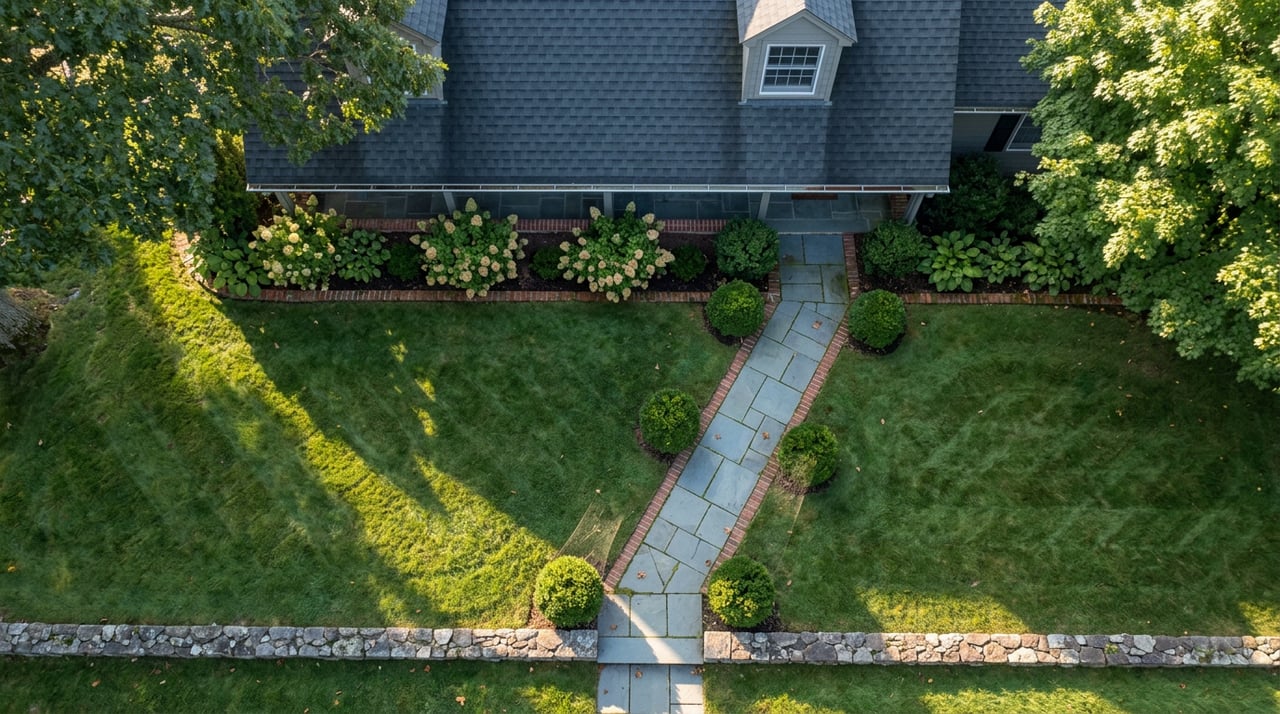
Why the Land Costs More Than the House in Upper Arlington
August 27, 2026
August 27, 2026
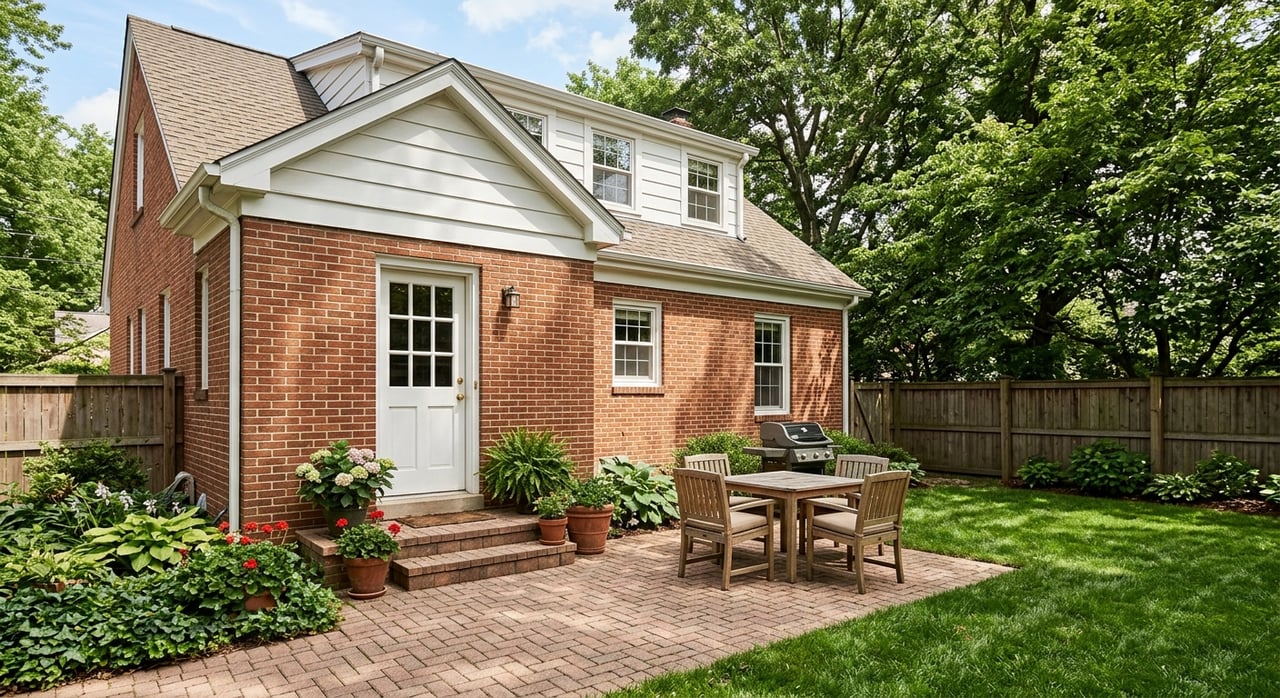
Tom and Tara were living in Hilliard when a real estate agent friend texted them on vacation: a historic home in Upper Arlington's South of Lane neighborhood was about to hit the market. They flew home early, made an off-market offer, and got the house. It was a nearly 3,000-square-foot Colonial built in 1917, four bedrooms, three and a half baths, sitting on a corner lot. What they didn't know yet was that the kitchen addition had been built without proper footers and was slowly sinking into the ground. The renovation they budgeted at four to five months took nearly twice that long once the contractor found the problem.
Their story, told in a Columbus Monthly feature earlier this year, is the kind of thing that shows up in every historic-home renovation piece: charm, surprise, expense, relief. But it also illustrates something buyers rarely hear stated plainly. Tom and Tara didn't move to Upper Arlington to buy a house. They moved to buy a piece of land in a specific school boundary, and the 1917 structure sitting on it was almost beside the point.
Upper Arlington's median sale price sat at $620,000 over the three months ending in April 2026, with homes trading at roughly $303 per square foot. Those numbers get repeated across every portal and market snapshot, and they suggest a fairly ordinary story: a desirable suburb, a premium over the regional average, done.
What that median doesn't tell you is that it's blending two entirely different products. One is an aging structure that happens to sit on valuable ground. The other is new construction where the price is set almost entirely by the dirt underneath it. A city-commissioned housing study of Upper Arlington found that land parcels redeveloped in the past five years carried a median price of $1.3 million per acre, and that construction costs run $200 to $300 per square foot on top of that. Put those together and a builder can't deliver a new single-family home below roughly $1 million, regardless of how modest the floor plan is. Larger homes on larger lots typically start north of $1.8 million.
That's the part a median price obscures. You're not really shopping for square footage in Upper Arlington. You're shopping for an acre, and the house is what happens to be sitting on it.
"If you buy one of these historic homes, you have a duty to preserve it for the next generation."
That's Tom, describing the sense of stewardship that came with the Colonial. It's also, without meaning to be, a fairly accurate description of what buyers are actually purchasing: not just square footage and bedroom count, but a claim on land that the market has already decided is worth more than most of what could be built on it today.
Here's a detail that complicates the price-per-square-foot comparisons buyers tend to run between suburbs. The average home in Upper Arlington runs about 3,028 square feet, compared to a Franklin County average closer to 1,990 square feet. That's over 50 percent larger than the typical county home.
So when you see Upper Arlington's price per square foot sitting only modestly above a neighboring suburb, don't read that as "similar value, slightly higher premium." A market where the typical home is half again larger than the county norm is not competing on square footage economics at all. It's competing on lot size, tree canopy, proximity to the schools, and a construction stock that skews toward larger, older homes on larger parcels. Comparing per-square-foot prices across two markets with that different a size profile tells you less than it seems to.
Once land is worth more than the structure sitting on it, redevelopment stops being a niche event and starts being routine. That's exactly what's happening across parts of Upper Arlington right now, and it explains a pattern that confuses a lot of buyers touring older neighborhoods: a perfectly livable 1950s ranch listed at a price that seems to bear no relationship to its condition, size, or finishes.
The math is simple once you see it. If the land under a small ranch is worth $1.3 million per acre and the ranch itself has depreciated toward the value of its materials, a buyer paying for the ranch is really paying for the lot, with the house as a placeholder that will likely come down within a few years. New custom construction currently underway in South of Lane reflects this directly, with homes over 4,600 square feet slated for completion in 2027 and asking prices well north of $1 million before finishes are even selected.
This is the mechanism behind Upper Arlington's price floor. It isn't demand for big houses. It's a shortage of buildable land in a boundary that families are willing to pay a premium to enter.
| Home type | Typical price range |
|---|---|
| Townhomes and entry-level ranches | $350,000 to $475,000 |
| Mid-century ranches, many renovated | $475,000 to $750,000 |
| Larger colonials and updated homes | $700,000 to $1,200,000 |
| Historic South of Lane and new construction | $900,000 to $2,000,000+ |
The spread across those tiers is wider than most Columbus suburbs see, and the reason isn't finish quality. It's land. A renovated ranch and a new build on an identical lot size can be separated by half a million dollars or more, because the ranch's price still reflects some depreciation on the structure while the new build's price reflects current land cost plus current construction cost, full stop.
Buyers priced out of this math don't usually leave the northwest Columbus corridor entirely. They go to Hilliard. It's the comparison that comes up more than any other for people cross-shopping Upper Arlington, and for a specific reason: Hilliard offers a similarly regarded school district, meaningfully more new-construction inventory, and typically lower prices across comparable home types.
That comparison only makes sense once you understand the land mechanism. Hilliard has more available land to build on, so new construction there isn't fighting the same $1.3-million-per-acre floor. A buyer who wants a brand-new four-bedroom home with modern systems and doesn't need the specific Upper Arlington boundary can get meaningfully more house for the money a few miles west.
The tradeoff shows up in the current market's competitiveness, too. As of March 2026, Upper Arlington homes were selling at 103.35 percent of asking price, and 56 percent of transactions closed above asking, up from about 39 percent a year earlier. Homes were moving in the mid-twenties for days on market, depending on whether you're reading Houzeo's March snapshot or Redfin's three-month window ending in April. That's not a market where a buyer has room to negotiate on a teardown-adjacent lot. It's a market where the land itself is the thing being bid up.
There's a cost coming that none of the portal-style market snapshots will capture, because it hasn't happened yet. Upper Arlington Schools is putting a $273.5 million bond issue on the November 3, 2026 ballot, paired with a 4.9-mill operating levy. If it passes, the district estimates it would raise property taxes on a $500,000 home, as valued by the county auditor, by about $1,250 a year.
For a buyer running the numbers on a $900,000 new build or a $1.5 million South of Lane rebuild, that's a real number to model into carrying costs, not a footnote. For a seller weighing whether to list before or after the vote, it's worth understanding that the tax picture buyers are evaluating right now may not be the tax picture they're evaluating in December. Either way, it's the kind of local, dated fact that a generic market update from outside the area simply won't have.
If a home's price per square foot looks high, does that mean it's overpriced? Not necessarily, and in Upper Arlington it's often the wrong question. A better one is what the lot itself would fetch if the structure weren't there. Two homes with identical square footage can carry very different values depending on lot size, orientation, and whether the boundary supports a larger rebuild.
Should I wait until after the November bond vote to buy or sell? There's no single right answer, since it depends on your timeline and how sensitive your budget is to a roughly $1,250 annual increase on a $500,000 valuation. What matters is factoring the possibility into your math now rather than being surprised by a tax bill next year.
If you're trying to figure out what a specific lot, structure, or renovation project is actually worth in this market, that's exactly the kind of pricing question Deborah Parris works through with clients every week. Reach out to request a home valuation and get a read on where your property or your target listing really sits once the land underneath it is priced correctly.
Your Next move starts with a conversation.
DEBBIE PARRIS
3160 Kingsdale Center Upper Arlington OH 43221