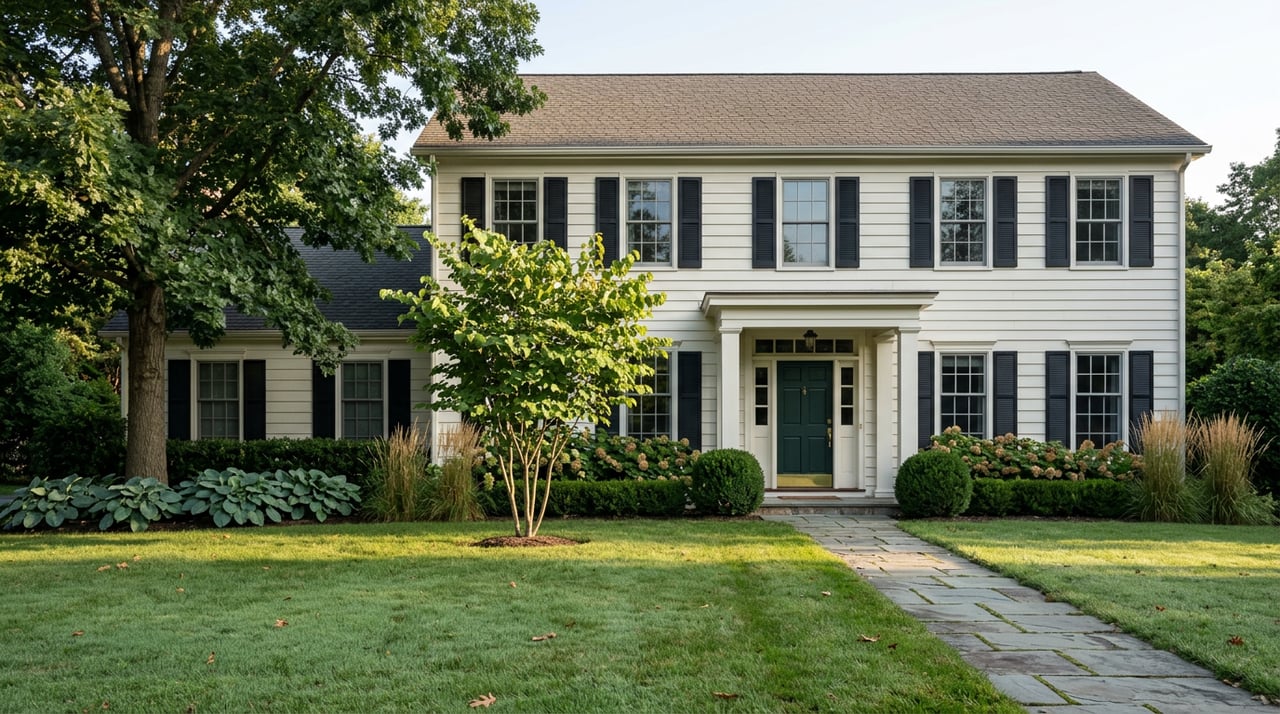
Powell Doesn't Have One Housing Market. It Has Three.
September 3, 2026
September 3, 2026
As of August 2026, the average sold price for a home in Powell sits at $580,376. Search that number and you'll find it cited everywhere, usually as proof that Powell is expensive relative to the rest of Central Ohio, where the regional median sale price was $350,000 in July 2026. Both figures are accurate. Neither one describes a house you can actually walk through.
That's because Powell isn't one market wearing one price tag. It's three markets that happen to share a school district and a city limit sign, each priced by a different mechanism, and each one just got hit by a separate piece of news that changes what a buyer or seller should actually be pricing in.
If you're looking at an older home near the brick-lined blocks of downtown Powell, the rules you thought you understood shifted earlier this month. Powell City Council approved a comprehensive rewrite of the city's planning and zoning code, the product of an 18-month effort the city says was needed to modernize development regulations and speed up review. Buried inside that rewrite is a smaller, more consequential change for anyone who owns or wants to buy an older home downtown: the Historic Downtown Advisory Commission is being folded into the standard Planning and Zoning Commission. Staff had found that under a newly drawn local historic district, the HDAC would have heard an average of fewer than two cases a year, which made a dedicated review body hard to justify. The practical result is that the specialized lens historic properties used to get is being replaced with a general one, right as the city finalizes new historic district boundaries around what it calls the four corners and the northwest quad of downtown.
This isn't happening in a vacuum. Downtown Powell is currently absorbing new housing stock built right up against its oldest streets. Corinthian Fine Homes got final approval this spring for 14 townhomes off South Liberty Street, on a site where an earlier 2014 plan for 22 units mostly stalled, with only eight ever built and a historic structure on the parcel demolished last year after storm damage. A few blocks over, Fischer Homes' Grand Communities division added nineteen houses on Depot Street next to Nocterra Brewing Co. under the name Encore Park, part of what the builder marketed as its Uptown Collection. And COhatch, the Columbus-based coworking company, is redeveloping a stretch of North Liberty and East Olentangy streets that will include a rooftop bar called the Lani Rooftop Lounge and a renovated historic home dubbed the 60 East Member House. A separate developer proposed a 16-room boutique hotel and two restaurants for the same corridor last November, backed by roughly $7.8 million in investment and a request for property tax abatements the city is still weighing.
None of this is about square footage. A buyer paying a premium for a century-old cottage two blocks from Local Roots isn't comparing it to a 3,000-square-foot new build. They're paying for scarcity and walkability in a downtown the city is actively investing to keep dense, and the rules governing what they can change about that cottage just moved from a historic-focused commission to a general one.
Drive north to Home Road and Sawmill Parkway and the pricing logic flips entirely. Ohio State's Wexner Medical Center is opening Outpatient Care Powell this month, a $183 million, 207,000-square-foot facility on 30 acres across from Olentangy Liberty High School. It's one of the largest single economic development projects the city has ever hosted, and it sits at the center of a corridor where, unlike the built-out suburbs closer to Columbus, raw land is still genuinely available.
That combination, an anchor employer opening its doors and land that hasn't already been subdivided, is why new construction near Home Road commands a higher price per square foot than the citywide figure would suggest, even though this is also where inventory is loosest. New-build listings here average 3,108 square feet, well above the typical resale home, and much of the fresh supply hitting the market right now is builder product that hasn't yet gone through a price correction. A buyer here isn't paying for a walk to a coffee shop. They're paying for the freedom to build something bigger, near a hospital campus that just added jobs to the northern growth corridor.
Neighborhoods like Wedgewood, Kinsale and Golf Village, and Scioto Reserve run on a third curve entirely. Their premium comes from club access and privacy, not proximity to a hospital or a walkable core. A golf-course lot in one of these communities and a similarly sized new build off Home Road can sell for wildly different per-square-foot prices, because the buyer pool isn't shopping the same want list.
Here's what that looks like laid out side by side, using the data currently available for each segment:
| Segment | What sets the price | Recent catalyst | What it isn't about |
|---|---|---|---|
| Historic downtown core | Land scarcity, walkability | Zoning rewrite, HDAC folded into P&Z, new infill from Corinthian and COhatch | Square footage |
| Home Road / Sawmill corridor | Anchor employer, available land | OSU's $183 million outpatient campus opening this month | Walkability |
| Golf and club communities (Wedgewood, Kinsale/Golf Village, Scioto Reserve) | Club access, privacy | No comparable regulatory or construction event this year | Proximity to jobs or transit |
None of this means the citywide figures are useless. They're just the wrong tool if you use them the way most portals suggest. As of August 2026, Powell's median sold price per square foot across roughly 479 tracked MLS sales is $216. That number is a blend of a scarce downtown lot, a fresh Home Road build, and a Wedgewood estate with a golf course view, and blending those three into one line hides more than it reveals.
Used correctly, that $216 figure is a filter, not a benchmark. Divide any specific asking price by its square footage and compare it only against homes in its own segment, not against the citywide average. Active listings currently outnumber pending sales by a ratio of roughly 1.59, which puts the overall market in balanced territory, not the frenzy it was a few years ago. But the typical home going under contract right now is still closing at 99.8% of its list price, so buyers shouldn't expect a discount just because there's more selection on paper. Correctly priced homes, in any of the three Powells, are still moving close to ask.
Financing adds one more layer worth knowing before you write an offer. Freddie Mac's Primary Mortgage Market Survey for the week of August 20, 2026 put the 30-year fixed rate at 6.65%, a second straight weekly decline, with the 15-year averaging 5.95%. Both sit modestly above where they were a year earlier, at 6.58% and 5.69% respectively. That's drift, not relief, and it's part of why new construction inventory near Home Road has had room to build up. Fewer buyers are stretching for the newest, biggest option right now, which is precisely the segment where that extra supply is concentrated.
Does the HDAC change affect my ability to renovate an older home downtown? It changes who reviews your project, not necessarily whether it gets approved. Review authority moves from a dedicated historic commission to the general Planning and Zoning Commission, and the city is still finalizing which parcels fall inside the newly drawn historic district boundaries.
Why does a new-construction home near Home Road cost more per square foot than a similarly sized resale closer to downtown? Because it's competing for a different reason. Proximity to a new $183 million employer and access to land that hasn't already been built out both add value that has nothing to do with walking distance to Mr. Bean or Jeni's.
Is Powell currently a buyer's market or a seller's market? Neither, evenly. A 1.59 active-to-pending ratio and a 99.8% list-to-sale ratio point to a market with real selection but very little room to lowball a well-priced home.
If you're trying to figure out which of Powell's three markets your search actually belongs in, or you're getting ready to price a home in one of them, Debbie Parris can walk you through the comps that matter for your specific street, not the citywide average. Request your free home valuation and get a number built for your actual house, not a blend of three.
Your Next move starts with a conversation.
DEBBIE PARRIS
3160 Kingsdale Center Upper Arlington OH 43221