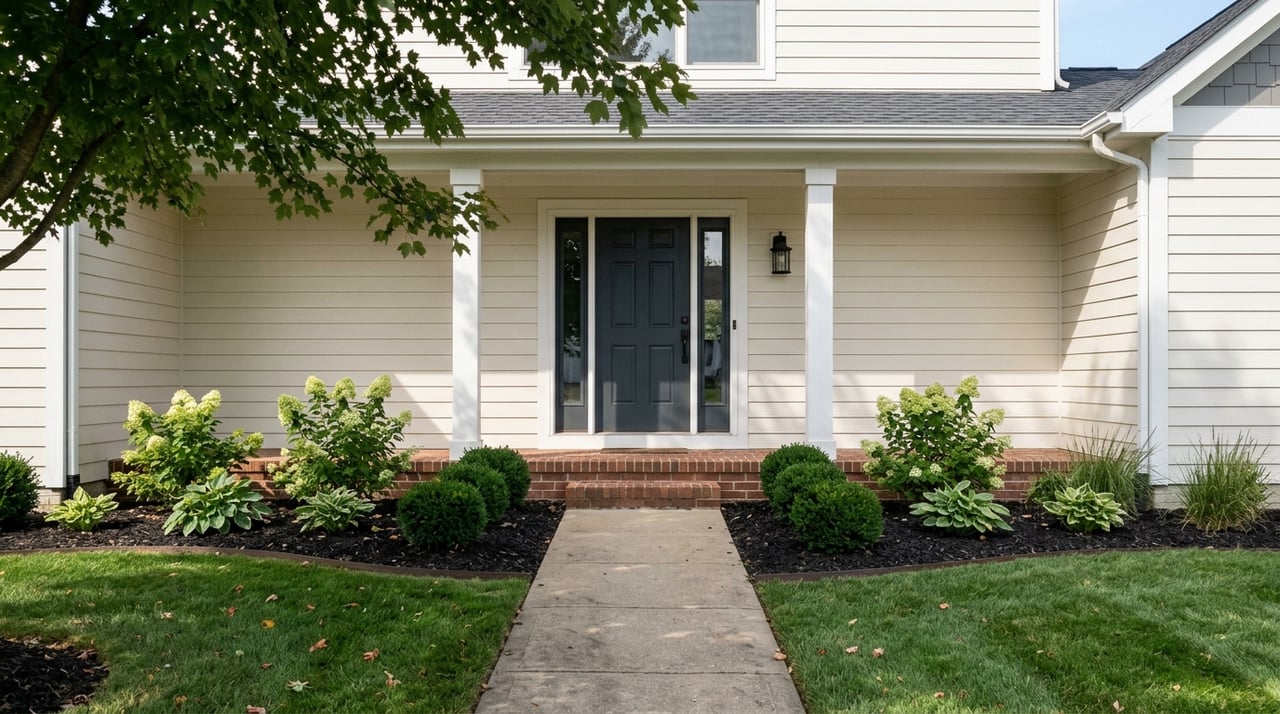
Relocating to Dublin Ohio: A Smart Guide for Buyers
June 11, 2026
June 11, 2026
Moving to Dublin can look simple on a map, but your home search gets much easier once you understand how different each part of the city feels. You may be comparing commute times, home styles, price points, and day-to-day lifestyle all at once, especially if you are relocating on a deadline. The good news is that Dublin offers a wide range of housing options, from walkable condo living to established single-family neighborhoods and larger homes near open space. This guide will help you sort through those choices and focus your search where it fits best. Let’s dive in.
Dublin is more than one typical suburb. The city’s land-use planning describes a housing stock that is still largely single-family, with many homes built between 1980 and 2000, but the overall market includes older established subdivisions, a walkable urban core, golf-course and custom-home settings, and lower-density edge areas.
That variety matters if you are relocating from outside Central Ohio. Instead of treating Dublin as one uniform market, it helps to think of it as a collection of distinct housing experiences. Your best fit may depend less on the city name and more on how you want to live from Monday through Sunday.
Dublin remains a competitive market, which is important if you are trying to time a move around a job start, school calendar, or sale in another city. In spring 2026, Realtor.com reported a median listing price of $522,000 and a median of 32 days on market, while Redfin showed a median sale price of about $618,681 over the prior three months and about 43 days on market. Zillow placed the typical home value at $559,786, with homes going pending in around 18 days.
The takeaway is practical. You usually do better in Dublin with a focused plan than with casual weekend browsing. If you know your budget, commute priorities, and preferred home type before you start touring, you can move faster when the right property appears.
A smart relocation search in Dublin usually begins with three filters:
Your commute anchor is the place you need to reach most often, whether that is a hospital campus, office node, research site, or another part of the metro. Your housing product is the type of home you actually want, such as a condo, patio home, attached townhome, or traditional single-family house. Your lifestyle tolerance is how much traffic, activity, maintenance, density, or design oversight you are comfortable with every day.
When you narrow those three filters first, Dublin becomes much easier to read.
If you want walkability and a stronger sense of place, this is often the first area to consider. Historic Dublin includes the city’s original settlement, with older residential areas along South Riverview and South High Streets and architecture that includes vernacular stone homes as well as Federal, Italianate, and Greek Revival styles.
This part of Dublin offers character that is hard to duplicate in newer suburban neighborhoods. At the same time, ownership can come with more preservation-oriented expectations. The city notes that some exterior work in the district may fall under Architectural Review Board oversight, so buyers should be ready for a more design-conscious ownership experience.
Right next to Historic Dublin, the Bridge Street District and Bridge Park form Dublin’s mixed-use downtown core. The city describes Bridge Park as a walkable mixed-use community with luxury condos and apartments, a grocery, restaurants, shops, offices, entertainment venues, a hotel and conference center, and green space.
If you like the idea of lower-maintenance living and having amenities nearby, this area deserves serious attention. It is also part of the city’s DORA area, along with portions of Historic Dublin, which adds to the active, urban feel.
This area can be a strong fit if you want:
Bridge Park and downtown-core condos or townhomes also represent their own pricing category. Based on recent examples in the research, that product can range from the high $300,000s into the $700,000s and above.
Muirfield Village is one of Dublin’s best-known residential areas and the city’s largest development. According to the resident handbook, it was created in 1974 and includes a wide mix of housing, including condominiums, patio homes, single-family homes, ranches, large estates, and custom-built homes.
That range is part of what makes Muirfield so appealing to relocating buyers. You can find very different living experiences within the same broader community, from easier-maintenance options to larger homes on wooded lots or with golf-course views.
From a pricing standpoint, Muirfield generally sits toward the higher end of the Dublin market. Realtor.com placed Muirfield Village at a median listing price of about $747,450 in the research provided.
Many buyers are drawn to Muirfield for:
If you want an established neighborhood with larger homes and a more traditional suburban setting, Muirfield often belongs on your first tour list.
If your move is driven by commute efficiency and practical housing choices, the Avery Road and Perimeter areas are worth early attention. Dublin’s Avery Road Corridor plan describes a suburban edge with modest single-family homes, empty-nester housing products, townhomes, and multifamily projects.
This corridor also connects community-scale retail north of U.S. 33 with Columbus and Hilliard to the south. For many relocating professionals, that combination can be more useful than a prestige address. You may find the right balance of accessibility, housing variety, and daily convenience here.
These areas can make sense if you want:
For some buyers, this is also where the search begins to feel more financially flexible compared with Dublin’s highest-priced pockets.
On the northwest side of Dublin, the feel changes again. The city emphasizes conservation design, lower-density planning, and protection of rural character in this part of the community.
The Northwest and Glacier Ridge planning area includes large-lot single-family homes along roads such as Hyland-Croy, Mitchell-Dewitt, McKitrick, and Brock in nearby planning areas. This part of Dublin is also closely tied to open-space assets, including Glacier Ridge Metro Park.
If you want more land, a quieter setting, and easier access to green space, this is an area to study early. It offers a different experience from the more central and walkable parts of Dublin.
Dublin’s price points vary by housing type and location, so broad guideposts are more useful than one citywide number. Based on the research provided, here is a practical way to think about current ranges:
| Home type or area | General price guide |
|---|---|
| Older or more value-oriented neighborhoods and some attached homes | High $300,000s to low $400,000s |
| Typical citywide move-up search territory | Low to mid $500,000s |
| Muirfield Village and similar golf-course or custom-home product | Mid $700,000s and up |
| Bridge Park and downtown-core condos or townhomes | High $300,000s to $700,000s+ |
These are not fixed tiers, but they are useful planning markers. If you are relocating, they can help you decide quickly whether your search should focus on attached living, established subdivisions, move-up homes, or higher-end custom product.
Commute patterns matter more in Dublin than many out-of-town buyers expect. Major routes include I-270, U.S. 33/SR 161, Frantz Road, Avery-Muirfield Drive, and the city’s river crossings.
Dublin’s transportation study identifies recurring congestion at the I-270/U.S. 33/SR 161 interchange, SR 161 between Hyland-Croy Road and Cosgray Road, the Avery-Muirfield corridor, Frantz Road, and river crossings. The city completed the U.S. 33/SR 161/Post Road interchange improvement in 2025, which should help traffic flow, but rush-hour pressure remains part of life in a growing employment center.
That means your address can shape your weekday experience more than the map alone suggests. A home that looks only 10 or 15 minutes farther away may feel meaningfully different if your route depends on a congested corridor.
Two notable employment reference points in the research are:
If your work is tied to those nodes, it can help you decide whether west Dublin, central corridors, or the downtown core should get priority.
Many suburban buyers assume they will rely only on driving, but Dublin offers more mobility options than expected. COTA provides fixed-route service and COTA//Plus on-demand microtransit across Central Ohio.
Dublin’s mobility resources also highlight the fare-free Dublin Connector for residents age 55 and older and residents with disabilities. In addition, the city’s LinkUS materials identify a planned Northwest Corridor Bus Rapid Transit line from downtown Columbus to Bridge Park and Ohio University Dublin.
If you want the option to mix driving with transit, Bridge Park and nearby neighborhoods become even more interesting. That may not be the deciding factor in your search, but it can add flexibility.
One of Dublin’s clearest strengths is its park system. The city says it operates 52 parks totaling more than 949 acres, with 34 acres of parkland per 1,000 residents. The Community Plan also notes that Glacier Ridge Metro Park adds another 1,038 acres immediately next to the city.
That scale matters in daily life. Green space in Dublin is not just decorative. It is part of how people use the city on weekdays, weekends, and throughout the year.
Some of the most practical amenity anchors include Coffman Park and the Dublin Community Recreation Center, Riverside Crossing Park, Scioto Park, Ballantrae Community Park and its spray fountains, and the shared-use path network across the city.
These are the places that often shape your routine once the move is over. They support workouts, festivals, family outings, winter activities, errands by foot or bike, and general downtime outdoors.
If you are relocating on a tight timeline, one of the best strategies is to compare very different settings in the same day. The research suggests pairing online searching with a custom in-person route that includes at least three product types.
A strong first tour might include:
This side-by-side comparison can tell you more than hours of online browsing. You can better judge traffic flow, parking, lot size, maintenance expectations, evening activity, and how each area actually feels in person.
Dublin gives you real choices, which is both the opportunity and the challenge. You can find walkable urban living, established suburban neighborhoods, golf-course and custom-home settings, and quieter edge areas with more land, all within the same city.
The key is not to search everywhere at once. It is to define your commute anchor, your preferred home type, and the lifestyle you want day to day. Once those pieces are clear, your search becomes faster, smarter, and much less stressful.
If you are planning a move to Dublin and want a clear, data-driven strategy for narrowing neighborhoods, touring efficiently, and making a confident offer, connect with Deborah Parris.
Your Next move starts with a conversation.

DEBBIE PARRIS
3160 Kingsdale Center Upper Arlington OH 43221